
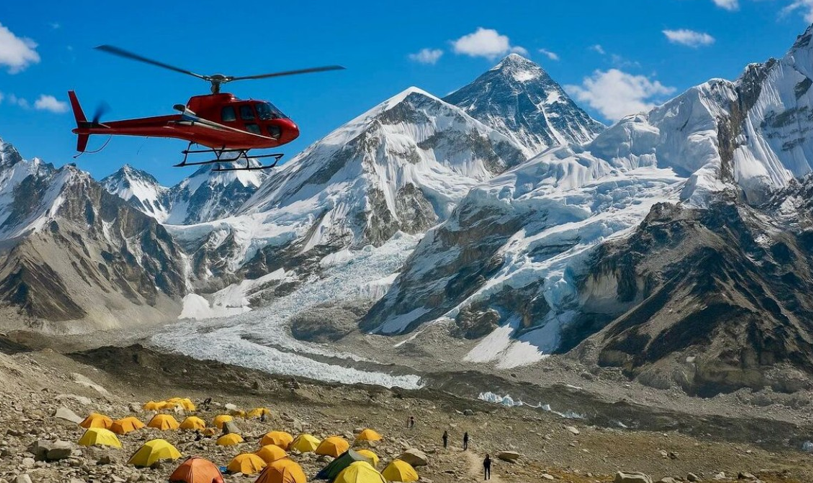
ByJohn A
Everest Base Camp Helicopter Tour: A Complete Guide to Helicopter Tours, Flights, Services and Planning in Nepal
Introduction
Not everyone who wants to see Mount Everest has two weeks to spend walking toward it. Some travelers are working around a tight vacation schedule, others are managing a health condition or fitness level that makes multi-day trekking impractical, and some simply have no interest in long uphill days and teahouse stays. For all of these travelers, the Everest Base Camp Helicopter Tour offers a different way into the Khumbu region — one measured in hours rather than days.
This isn’t a shortcut version of the trek, and it isn’t meant to replace it. It’s a separate kind of experience built around aerial views, a high-altitude landing, and a same-day return to Kathmandu. As Helicopter Tour in Nepal options have grown more common, and Nepal Helicopter Service operators have expanded their Everest-region offerings, more travelers are treating the Everest Helicopter Tour as a legitimate way to experience the mountain, not a consolation prize for skipping the trail.
This guide covers the route, what you’ll actually see, landing options, the best season to fly, what drives the cost, safety considerations, and how to figure out whether this kind of tour fits your trip.
Everest Base Camp Helicopter Tour at a Glance
| Detail | Overview |
| Tour type | Aerial sightseeing flight with a high-altitude landing stop |
| Typical overall duration | Roughly 3 to 5 hours door-to-door, including hotel pickup and breakfast stop |
| Main departure point | Kathmandu domestic terminal |
| Everest-region landing/viewpoint | Kala Patthar and/or Everest View Hotel at Syangboche, depending on itinerary |
| Major mountain views | Everest, Lhotse, Nuptse, Ama Dablam, and neighboring Khumbu peaks |
| Trekking required | None |
| Best suited for | Time-limited travelers, older visitors, families, photographers |
| Weather dependency | High — flights can be delayed, rerouted, or cancelled |
| Main planning consideration | Confirming the exact landing point and itinerary before booking |
A helicopter tour compresses what a trekking itinerary spreads across many days into a single flight. A trek builds gradual altitude exposure, extended village time, and a walking relationship with the landscape. A helicopter tour trades that gradual immersion for speed and convenience, offering a concentrated look at the same mountains from the air and, usually, from one high-altitude stop on the ground.
What Is an Everest Base Camp Helicopter Tour?
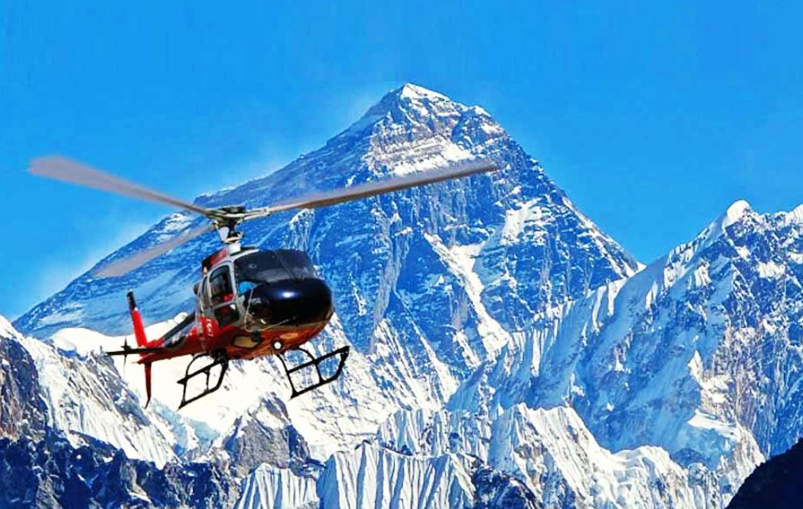
An Everest Base Camp helicopter tour is a chartered or seat-in-helicopter flight that departs from Kathmandu, flies into the Khumbu region, and returns the same day, typically including a landing stop somewhere in the Everest area. The “base camp” naming is largely conventional — most tours are built around views of the Everest massif and a landing near the mountain, rather than a stop at Base Camp itself, which sits on a shifting glacier without a prepared landing surface.
The flight generally follows the Himalayan range eastward from Kathmandu toward Lukla, then continues deeper into the Khumbu Valley. Depending on the operator, the helicopter may stop briefly at Lukla for refueling, then proceed toward a high-altitude viewpoint before descending to a lower-altitude stop, often Syangboche, for breakfast. Exact routing, which points the aircraft lands at, total flight time, and whether Lukla is used at all can vary from trip to trip because of weather, aviation regulations, seasonal restrictions, and traffic at the Khumbu’s small mountain airstrips.
This format appeals strongly to travelers who can’t set aside 10 to 14 days for the classic Everest Base Camp Trek. Before booking, it’s worth distinguishing between three products marketed under similar names: a pure aerial flyover with no landing, a landing tour that stops at a specific high-altitude point, and a package that bundles the flight with hotel transfers, breakfast, or other ground arrangements.
What You Can See During the Flight
The view unfolds in stages. Shortly after takeoff, passengers see the Kathmandu Valley from above, its dense urban sprawl giving way to terraced hillsides and river valleys. As the flight continues, the terrain shifts from mid-hill farmland into steep, forested foothills and then into the high Himalaya. Once the helicopter reaches the Everest region, the Khumbu’s defining features come into view: Namche Bazaar’s amphitheater-shaped hillside settlement, the Tengboche monastery ridge, and glacial valleys carved between granite walls. Depending on the route, passengers may also see the Khumbu Glacier and, when conditions and permissions allow, the area around Everest Base Camp itself.
The main event for most itineraries is the view of Mount Everest alongside neighboring giants such as Lhotse, Nuptse, and Ama Dablam. What’s actually visible, and how clearly, depends heavily on cloud cover, wind, morning light, and season — a factor that matters more here than for almost any other tour in Nepal.
Typical Everest Helicopter Tour Route and Flight Experience
Kathmandu to the Everest Region
Most tours begin with an early-morning hotel pickup and transfer to Kathmandu’s domestic terminal, since morning departures generally offer calmer air and clearer visibility before daytime cloud builds over the mountains. The helicopter climbs out of the Kathmandu Valley and heads east, tracking roughly parallel to the Himalayan range, with the landscape below shifting from valley farmland to forested ridgelines to bare, rocky high terrain as the aircraft gains altitude.
Everest Region Viewing or Landing Point
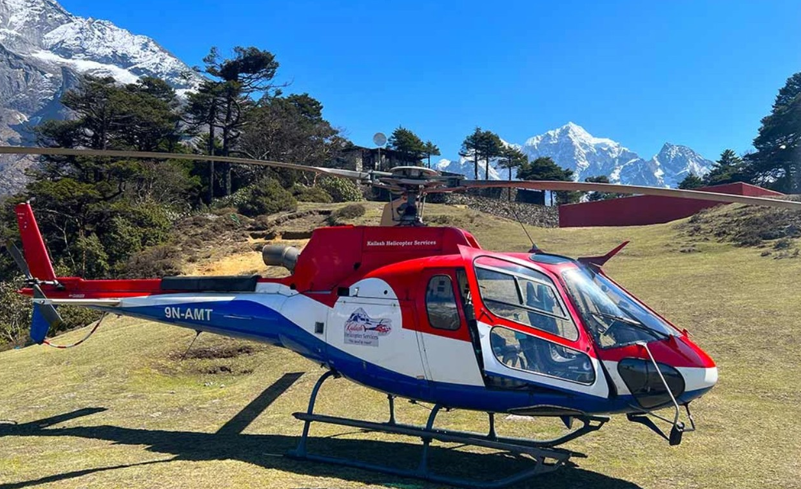
Landing arrangements differ meaningfully between operators. Some itineraries land briefly at a high viewpoint such as Kala Patthar, which sits above 5,500 meters and offers an unobstructed view of Everest’s summit that isn’t actually available from Base Camp itself, since the mountain’s West Shoulder blocks that sightline. Other itineraries stop only at the lower-altitude Everest View Hotel near Syangboche for a breakfast break with mountain views. A landing at any of these points doesn’t mean travelers can wander freely across the terrain; passengers generally stay near the aircraft and follow crew instructions because of thin air, weight limits, and altitude safety protocols.
Return to Kathmandu
After the viewing or landing segment, the helicopter retraces a similar path back to Kathmandu. The full experience, door to door, is usually measured in hours rather than days — the core difference from a trek, which involves overnight teahouse stays, a multi-day acclimatization schedule, and daily walking.
Kathmandu → Himalayan flight → Everest-region viewpoint/landing → mountain viewing → return flight
No single version of this route is universal — operators structure their own sequences based on aircraft, weather patterns, and current aviation approvals, so it’s worth asking exactly what a specific package includes rather than assuming a standard route.
Everest Base Camp Helicopter Tour vs Everest Base Camp Trek
| Factor | Helicopter Tour | Trek |
| Time required | Short | Multi-day |
| Physical effort | Low | Moderate to demanding |
| Mountain exposure | Mainly aerial + selected landing/viewing | Continuous trail experience |
| Accommodation | Usually not required for a day tour | Teahouse/lodge stays |
| Altitude exposure | Short-duration | Gradual and prolonged |
| Cultural interaction | Limited | Greater |
| Flexibility | Weather-dependent | Weather and trail-dependent |
| Best for | Time-limited travelers | Travelers seeking the trekking experience |
Neither option is objectively better — they answer different questions. If the priority is seeing Everest and the surrounding peaks without committing significant vacation time or physical preparation, the helicopter tour is the more practical choice. If the goal includes the trail itself, Sherpa villages, monasteries, and the gradual, immersive process of reaching Base Camp on foot, the trek remains the more complete way to experience the region.
Best Time for an Everest Helicopter Tour in Nepal
For a flight built around mountain visibility, clear skies matter more than comfortable temperatures — a warm, hazy day can produce a disappointing flight, while a cold, crisp morning often delivers the best views.
Spring (March–May) generally brings stable morning weather before afternoon cloud builds, though it’s also the Everest expedition season, which can bring restrictions around Base Camp. Autumn (September–November) is often considered the most reliable window for clear Himalayan visibility. Winter (December–February) can offer very clear, cold visibility, with more pronounced wind and cold at altitude. Monsoon (June–August) is generally the least favorable period, with cloud and rain frequently obscuring the peaks.
Even in favorable seasons, individual days vary. An early-morning departure is generally advisable, since afternoon cloud buildup is common regardless of season — but the operator and Nepal’s civil aviation authorities make the final call on whether a flight proceeds, reroutes, or is postponed.
See also: Building a Restaurant POS System: Order Taking, Billing, and Real-Time Kitchen Communication
How Much Does an Everest Helicopter Tour Cost?
There’s no single fixed price for this kind of tour — cost depends on several variables that shift by season, group size, and exact itinerary. A private charter reserved for one group costs more per person than a seat on a shared flight, where the aircraft cost is split among several passengers. The number of passengers, whether the trip includes a landing stop or is a flyover only, transfer arrangements to and from the airport, seasonal demand, and airport or operational charges all factor into the final price.
Because these variables shift from year to year and season to season, it’s worth checking the current 2026 package price directly with an operator rather than relying on figures from older articles, which may no longer reflect current rates.
| Cost factor | Why it changes the price |
| Shared flight | Cost divided among passengers |
| Private charter | Aircraft reserved for the group |
| Landing arrangement | Adds operational complexity |
| Transfers | May be included or separate |
| Seasonal demand | Can affect package rates |
Nepal Helicopter Service: What Travelers Should Check Before Booking
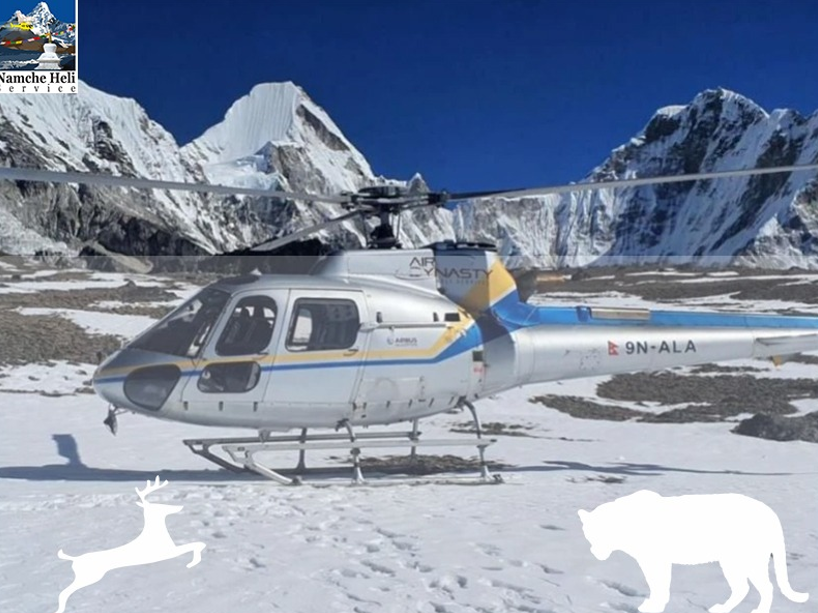
Before paying for any Everest-region flight, a reliable Nepal helicopter service should be able to clearly answer a set of practical questions: which aircraft and operator are running the flight, what pilot and operational standards apply, and what the weather cancellation policy looks like, since high-altitude flights are delayed or rerouted more often than typical sightseeing tours.
It’s also worth confirming refund or rescheduling terms for weather delays, passenger and baggage weight limits (which matter more here than on standard flights because of altitude performance limits), exactly which points the itinerary lands at, and whether transfers, taxes, and additional charges are included or billed separately. Ask about emergency and contingency procedures too, in case of a medical issue or a forced diversion.
Transparent terms matter more in high-altitude aviation than in most other travel bookings, simply because weather and altitude introduce more variables than a standard city tour. While researching helicopter services in Nepal, travelers will come across a range of operators and agencies — Namcheheli is one brand among several worth checking against this same list before booking.
Who Should Choose an Everest Helicopter Tour?
This kind of tour tends to suit travelers with limited vacation time who still want a genuine Everest-region experience, older travelers who’d rather avoid a long, physically demanding trek, and families looking for a shorter, more manageable way to see the Himalaya together. It also works well for those unable or unwilling to undertake prolonged trekking for health or fitness reasons, photographers chasing a specific shot, and visitors combining Everest with a broader Nepal itinerary.
Trekking remains the more appropriate choice for travelers whose main goal is the trail itself — the gradual acclimatization, the Sherpa villages along the way, and extended time immersed in the Khumbu rather than a same-day flight through it.
Health, Altitude and Safety Considerations
A helicopter tour significantly reduces the duration of high-altitude exposure compared with trekking, but it doesn’t eliminate altitude-related concerns entirely. Landing at points above 5,000 meters, even briefly, can affect travelers differently depending on individual health and how quickly the ascent happens, so anyone with a relevant heart, lung, or other medical condition should get professional medical advice before booking.
Passengers should follow crew instructions closely during any landing stop, since thin air, cold, and uneven terrain all increase risk at altitude. Safety also depends on aviation-specific factors — sudden weather changes, wind, and reduced visibility are common causes of delays or cancellations in the Khumbu — so travel insurance that covers high-altitude flights and trip disruptions is worth reviewing before departure.
What to Wear and Carry
- Warm, layered clothing and a wind-resistant outer layer
- Sunglasses and sunscreen
- Gloves and comfortable, closed-toe footwear
- Water and any personal medication
- Passport or identification, if required for the booking
- Camera or phone, with a secure strap or storage
- A small personal bag within the operator’s baggage allowance
Conditions at the Everest-region landing points can be significantly colder and windier than Kathmandu, even on a day that feels mild at lower elevation, so dress for the mountain rather than the city.
Booking and Preparation Checklist
- Confirm the exact itinerary and which points the flight lands at
- Confirm departure location and hotel transfer arrangements
- Ask whether the flight is shared or private
- Verify landing/viewing points — some tours are flyover-only
- Confirm the current price and exactly what’s included
- Read the cancellation and weather-rescheduling policy
- Check baggage weight limits and passenger requirements
- Keep some schedule flexibility in case weather disrupts the flight
- Avoid booking tight onward international connections right after the tour
Final Decision: Is an Everest Base Camp Helicopter Tour Right for You?
The right choice comes down to time, physical effort, altitude exposure, budget, weather flexibility, and the kind of experience you actually want. An Everest Base Camp Helicopter Tour is best understood as a compact, high-altitude aerial experience — not a substitute for the full trekking journey through the Khumbu. Before booking, compare the exact itinerary, current operating conditions, what’s included, cancellation terms, and safety arrangements across a few operators, so the flight you book matches the experience you’re expecting.
Frequently Asked Questions
How long does an Everest Base Camp Helicopter Tour take?
Most tours run roughly 3 to 5 hours from hotel pickup to return, though total duration varies with the specific itinerary, weather, routing, and any operational delays on the day.
Can you land near Everest Base Camp?
Landing exactly at Base Camp is uncommon, since the site sits on shifting glacial ice without a prepared surface, and access can be restricted during the climbing season. Most tours instead land at a nearby high point such as Kala Patthar, or at a lower stop like Syangboche — exact arrangements depend on the operator, current conditions, and aviation permissions.
Is an Everest Helicopter Tour possible all year?
Flights operate across seasons, but visibility and safety conditions vary. Autumn and spring are generally more reliable for clear mountain views, while monsoon season brings a higher chance of delay or cancellation.
Is the helicopter tour suitable for people who cannot trek?
Yes — it’s a practical alternative for seeing the Everest region without a multi-day trek. That said, any high-altitude landing still requires care, and travelers with health concerns should seek medical advice first.
Is the Everest Base Camp Helicopter Tour safe?
Safety depends on licensed aviation operations, real-time weather, aircraft maintenance, and crew judgment. Reputable operators delay or cancel flights rather than proceed in unsuitable conditions, so schedule flexibility is part of flying safely here.
What is the difference between an Everest Helicopter Tour and a Helicopter Tour in Nepal?
An Everest Helicopter Tour refers specifically to the Himalayan sightseeing route toward Everest. “Helicopter Tour in Nepal” is a broader category that also covers flights to other destinations and purposes, including pilgrimage flights, rescue services, and sightseeing over regions like Annapurna or Langtang.
Contact Details
Namche Heli Service
Namche Bazzar, Solukhumbu, Nepal
(Branch Office :Kathmandu Naya Bazar)
Phone +977-985-2850192 (WhatsApp)
Email: info@namcheheli.com
URL: www.namcheheli.com
